Showing posts with label chicken. Show all posts

Sunday, July 17, 2016

Poultry Feeds Explained

One of the most confusing things for a first-time flock owner is what to feed their birds! It seems like it would be so easy, just go to the store and buy "chicken feed," but when you get to the feed store, there are dozens of different types! What are all these different types of feed used for? Each of these feeds have a different purpose, and several of them may suit your flock.

Layer Feed

Layer feed is specifically designed for the laying hen, making sure she gets enough protein, calcium, and other minerals to keep her eggshells strong and her body and bones healthy. Layer feed is available in crumbles and pellets. There is a common misconception among holistic and organic bloggers that layer feed has hormones in it to make the hens lay more, but this is untrue. In fact, layer feed will not make hens lay more at all; it only keeps them healthy and keeps eggshells strong! 
Layer feed is best for hens who are more than 16-20 weeks old or laying, whichever comes first. Layer feed will not make them lay, so there's no rush! Do not feed it to young chicks, as their developing kidneys cannot handle the extra vitamins and minerals. Some believe that layer feed may cause kidney disease in roosters, which is a valid concern. However, many people have fed their roosters layer feed with no problems, myself included. Because of this, I believe that a rooster can handle the extra minerals as well as we can handle a multivitamin that gives us a little too much. 


Medicated Chick Starter

Medicated chick starter is for young chickens. This feed has a small amount of the drug amprolium which helps the chicks as they are exposed to coccidia without getting too sick. Coccidia is the single-celled parasite behind coccidiosis, a word which gives chicken keepers quite the headache. When using medicated feed, the chicks are exposed to the coccidia in the dirt, may contract a very mild infection which the amprolium in the feed helps them fight off before it gets too bad. They can still get a severe infection, however, if their waterers, feeders, and environment are not kept reasonably clean. Amprolium has no withdrawal time and there is no evidence that it is harmful to humans, although it cannot be used in an organic setting. 
Medicated chick starter is recommended for a minimum of 8 weeks of age, but you can feed it up to the point that you switch to layer (or other adult feed). It is mainly for chicken chicks. Game bird chicks (like guineas, turkeys, pheasant, quail) will need a higher protein feed than chickens, but you can still find a medicated version of these feeds. It is commonly said that medicated feed is poisonous to ducklings. This is both true and untrue. Previously, medicated feed was made with a different type of drug which waterfowl could easily overdose on. Now, that amprolium is mainly used, medicated feed will not hurt them, but it is not necessary. Waterfowl are extremely resistant to coccidiosis, so they don't need and help preventing it. However, if you are raising them with chicks that eat medicated starter, it will not hurt the ducklings. Just remember to at a niacin supplement for ducks!
*UPDATE* Medicated feed is now controlled by the Veterinary Feed Directive and requires a prescription by a veterinarian in order to obtain. 

Unmedicated Chick Starter

It is as it seems - a basic chick starter with no drugs to control coccidiosis. It is nutritionally complete for the growing chicken! Chicks can develop immunity without the help of drugs, but it is more difficult on the chicken keeper! When feeding unmedicated feed, you must slowly expose them to coccidia by introducing them to dirt when they are around 2 weeks old, and gradually increase their exposure. The organic/med-free keeper must also take extra care to keep waterers, feeders, and bedding very clean, as a dirty environment exposes them to more of the coccidia's oocysts, which causes infection. 
Chicks and ducklings can eat starter up until it's time to switch them to layer feed! If using for ducks, remember to at extra Niacin (B3). Using brewer's yeast (NOT bread yeast!) is a good way to supplement for Niacin.

Game Bird Starter

This feed is for baby "wild" fowl, like turkeys, pheasant, and quail, and is available in medicated and unmedicated versions. Game bird starter is very high in protein. Game birds require more protein than chickens or ducks, so it is important that they have a higher-protein diet. They are generally fed this feed until about 8 weeks of age. 

Game Bird Feed

This is mainly for adult game birds. It provides turkeys, quail, pheasant, and other wild fowl with adequate protein and nutrition in their adult years. It is also often used for chickens and ducks during molting, to help regrow feathers quicker and easier. It can be given to ducks and generally is higher the the niacin they need, but may be too high in protein and cause angel wing in younger ducks. 

Grower/Finisher Feed

Although Purina started marketing this for layers, it was originally only for broilers, like the Cornish Cross. It is designed to lower protein to prepare these broiler chickens for butchering, and is usually given to them at 6 weeks old. 

Purina Flock Raiser

Purina's Flock Raiser is meant for the mixed flock of different ages and species. At 20% protein, is is nutritionally similar to most unmedicated chick starters. A mixed flock is difficult to feed, and a general flock raiser is a good solution, although some of them may need a supplement! For ducklings, you may need to add a bit of Niacin. Leave out free choice oyster shell for the layers (don't worry! The others won't eat it unless they need it). This feed is pretty well-rounded and a good choice for those who raise a mixed flock. 

Nutrena Feather Fixer

Feather Feather Fixer is designed for the molting bird to grow in strong, shiny feathers. It can also be used for birds which are exhibiting signs of protein deficiency, such as feather-eating. According to Nutrena, Feather Fixer has extra protein, vitamins, and greens for ideal feather regrowth. Many people have found that their birds grow more healthy-looking feathers and get through molts quicker when using this feed. 

Waterfowl Feed

Waterfowl feed is ideal for ducks, geese, and swans. With most other feed, they must have niacin added or suffer a painful deficiency or risk getting angel wing, a deformity of the wing caused by a too high-calorie, high-protein feed. When using waterfowl feed for adults or young, you don't have to worry about adding supplements because it is complete for them. If you are raising waterfowl separately from other species, and this type of feed is available to you, it is highly recommended to use feed specifically for waterfowl!

We hope that we helped clear up some confusion! What feed do you use for your birds? Leave a Comment! Remember to check out our Facebook Page and our Instagram for regular updates and cute pictures!

Sources:
"NatureWise Feather Fixer Poultry Feed for Molting." NatureWise Feather Fixer Poultry Feed for Molting. Cargill, Incorportated, 2016. Web. 17 July 2016. <http://www.nutrenaworld.com/products/poultry/naturewise-poultry/feather-fixer/>.

Gerhold, Richard W., Jr. "Overview of Coccidiosis in Poultry." : Coccidiosis: Merck Veterinary Manual. Merck Sharp & Dohme Corp, 2009. Web. 17 July 2016. <http://www.merckvetmanual.com/mvm/poultry/coccidiosis/overview_of_coccidiosis_in_poultry.html>.

"Metzer Farms Duck and Goose Blog: Can Medicated Feed Be Used for Waterfowl?" Metzer Farms Duck and Goose Blog: Can Medicated Feed Be Used for Waterfowl? Metzer Farms, 30 Nov. 2011. Web. 17 July 2016. <http://metzerfarms.blogspot.com/2011/11/can-medicated-feed-be-used-for.html>.


Thursday, March 31, 2016

Breed Spotlight: Ameraucana

The rare and beautiful Ameraucana chicken takes today's spotlight! These rare and expensive birds are among the newest admitted to the American Poultry Association for breeding and show. They are prized for their weather hardiness and beautiful blue eggs. This breed is a bit of a status symbol among the chicken world, similar to owning a luxury vehicle or rare dog breed is to everyone else.

Appearance

Blue Ameraucana rooster
Ameraucanas have a very distinct appearance. They always have muffs and beards which should nearly cover their face completely. They come in the colors of black, blue, wheaten, blue wheaten, brown red, buff, silver, and white, according to the APA recognized standard. The lavender Ameraucana is becoming popular among enthusiasts, but has yet to be admitted to the Standard of Perfection. Body shape is full, but still slender. Due to the beard, the wattles are very small or absent. The Ameraucana has a pea comb, slate-colored legs, and is clean-legged, meaning there are no feathers on the shanks and toes. Males weight around 6.5lbs, females 5.5lbs.


Lavender Ameraucana hen

A Brief History

Ameraucanas descend from the Araucana chicken, which they are often confused with. They have been around for many years, bred from the Araucana chicken by those who wanted a blue laying bird with beards, muffs, and tails. They were first considered a variety of Araucana, before being admitted to the APA in 1976 as a specific breed. This led to confusion, as many breeders of muffed "Araucanas" continued to show their birds as such, sometimes as "American Araucana". In response, the APA began further development of the breed standard of the Ameraucana, thus becoming the breed we know of today. 
Since its introduction, this breed has been sought after for it's blue eggs, a rarity among chickens. This trait is shared with only a few other breeds, and is desired due to the beauty and novelty of the color.
(To the left) A blue chicken egg

Breed Confusion

Due to mislabeling by hatcheries, Ameraucanas are often mixed up with the common blue-green laying hybrid, the Easter Egger or Easter Egg chicken. Hatcheries often label Easter Eggers as "Americana" to mislead people and make their chicks sound more appealing. The problem is that people buy these birds and breed them without knowing what they have, selling them as "Americanas" just like the hatcheries. Ameraucanas breed true - their leg color, muffs, comb type, egg color, and all other distinguishing features. Easter Eggers do not breed true, and further generations of EEs will show brown eggs, any color legs, clean-faces, weird colors and patterns, and single combs. Due to the same mislabeling, Ameraucanas and EEs are often confused with the Araucana as well, which is a very rare tailless breed with ear tufts, but no beard or muffs. Chicks that are $2.99 at feed stores are Easter Eggers, as Ameraucana chicks generally cost more than $15 per chick!


A pair of Easter Egger chickens - note the green legs and non-standard coloring


Silver Ameraucana hen


Availability and Where to Buy

Due to the rarity of the Ameraucana, they are not as readily available as common farm chickens. There are only a handful of hatcheries which carry true Ameraucanas. Of these hatcheries is Meyer Hatchery in Ohio, but they are extremely limited and one of their most expensive birds. Your best bet is a local breeder, but this breed is costly. Birds from show-quality parents can cost you upwards of $35 a chick! Some breeders are willing to ship eggs or chicks, but make sure to do your research on the breeder before buying online. Also assure that you understand the breed standard so you can tell if someone is selling actual Ameraucanas or Easter Eggers. If you're willing to pay the price, they lay beautiful blue eggs that many people are willing to pay more for than typical white or brown eggs!

Do you own or breed Ameraucanas? Do you want them? Leave a comment! Remember to check out our Facebook page and Instagram for regular updates!


Sources

American Poultry Associasion. "APA Recognized Breeds and Varieties." APA Recognized Breeds and Varieties (2012): n. pag.Http://www.amerpoultryassn.com/. 1 Jan. 2012. Web. 31 Mar. 2016.

Orr, Richard A. "ABC Breed History." ABC Breed History. Ameraucana Breeder's Club, 1998. Web. 31 Mar. 2016. <http://www.ameraucana.org/history.html>.

"Ameraucana Breed Standard." Ameraucana Breeders Club. American Poultry Assn., 1998. Web. 31 Mar. 2016. <http://www.ameraucana.org/standard.html>.

All images in the article were obtained via Creative Commons and are licensed for noncommercial use.

Friday, March 25, 2016

Breed Spotlight: Orpington

The Orpington is one of the most common backyard chickens. They are large, fluffy birds that are good layers and excellent mothers. Chicken enthusiasts love them for their gentle demeanor and soft appearance. Lets dive more into this lovely breed!

Appearance

The Orpington comes in a variety colors and patterns, the most common being buff. They also come in blue, black, and white. Lavender Orpingtons are becoming popular, although it is not an accepted color in the American breed standard, as well as cuckoo, jubilee, crele, golden laced and many other colors. Orpingtons are a heavy, robust breed with very thick, fluffy feathering. They are so heavily feathered that show-quality birds often need trimming in order to successfully mate! Adult males weigh 9-10 lbs, females 7-8 lbs, making them a large breed. Orpingtons are clean-legged, clean-faced, and have a single comb.
A well-feathered black Orpington


History

Originally bred by William Cook in the village of Orpington during the late 1800s, these birds were intended as a dual-purpose chicken, and are still a popular choice today. Original DNA contributors to the Orpington include the Minorca, black Plymouth Rock, and Langshan. Although show stock has bred many of the original utility features in trade for a fluffier, rounder appearance, hatchery-bred stock is usually selecting for eggs and meat rather than conformity. It is believed that DNA from other breeds, possibly Cochins, was introduced in order to achieve the fluffy look of exhibition birds. 

In 1891, Orpingtons were first imported to the United States, and another shipment in 1903 by William Cook himself. The breed quickly gained popularity in the mid-western states, due to it's unique appearance and qualities as a meat bird.

A pair of buff Orpingtons. Female, left. Male, right.

Temperament

This breed is known for it's extremely docile nature. Because of this, Orpingtons are a popular choice for families with children. Roosters of the breed are known as one of the least likely to become aggressive, although they tend not to be as protective of the flock. Hens regularly go broody, and are known to be very attentive mothers. They are one of the most desired breeds of those who want broody hens, because their large size allows them to hatch large clutches at a time. Due to their behavioral traits, Orpingtons are an ideal choice for first-time chicken owners, families with young children, or those who want a hen to raise chicks.

Availability and Where to Buy

The Orpington is an extremely common breed, making them easy to obtain both by hatcheries and local breeders. Most hatcheries will carry this breed, although the birds from these hatcheries will most likely not be show stock. I recommend hatchery stock for those who are not showing, but are looking for a good dual-purpose bird. Local breeders may have laying/meat quality or show quality Orpingtons. If you wish to breed or show, I recommend studying the Standard of Perfection of the breed before buying your birds. 
A hatchery-quality Orpington may be the best option for the average chicken keeper


Some US hatcheries that carry this breed:


Sources and Links

"Orpington Chickens" Poultry Keeper. poultrykeeper.com. 25-3-2016

"Orpington Chicken" The Livestock Conservancy. livestockconservancy.com. 25-3-2016
https://www.livestockconservancy.org/index.php/heritage/internal/orpington

Images used in this article are obtained via Creative Commons

Do you own or breed Orpington chickens? Leave a comment and share your birds! Don't forget to like our Facebook page and follow our Instagram for regular updates and pictures! 

Tuesday, March 15, 2016

Feed Store Chick Buying Guide Part 2: Choosing healthy babies

Some people requested that I do a part two of my Feed Store Chick Buying Guide to help people notice signs of illness and defects when picking out their chicks at a feed store. I agree that it is very important for prospective chicken owners to know what a healthy, or unhealthy, chick looks like!

*Warning. There are images in this article of chicks with deformities and injuries. Reader discretion is advised. 

What a healthy chick looks like

A healthy chick reacts to stimuli, such as sudden sounds or movements. He may be sleeping under the lamp, but will wake up and move when a hand comes near him. His legs and toes are straight, strong, and flexible. When he is awake, he is alert and bright-eyed. A healthy chick is playful and hops around the bin, before he tires himself out for another nap. He doesn't peep excessively, but chatters with his hatchmates as he eats. Feed stores that do not allow customers to handle the chicks are likely to have healthier, disease-free chicks, and the chicks are less likely to be injured. 
Red Sexlink Chick from Tractor Supply Co., Blossom
Choco, Golden Sebright Chick from Tractor Supply Co. See her stance, upright with strong, straight legs. Eyes are clear and alert. Wings are held high,

These chicks at Rural King Supply appear very healthy!
We came home with six of them!


What an unhealthy chick looks like

There are many different ailments that affect fragile young chicks, and they appear with different symptoms. Some chicks are sick or injured, while some are simply too weak to survive. Don't pick out a chick that is slow to react, will not move from the heat lamp, or is having trouble standing. I have noticed when a chick is injured or ill, it lets out long, loud peeps constantly. If a chick is going "peepeep. peep. peepeepeep peep. p-p-ppeep" that's good, but if it's going "peeeeep! peeeeeep! peeeeeep! peeeeep! peeeeep! peeeeeeeep!", I've found that to be a sign that something is wrong. An ill or weak chick may be sitting on it's hocks, periodically trying to stand but is wobbly and may fall over. Ill, injured, or dying chicks may also be getting trampled by their hatchmates because they are too weak to move or push them off. Sometimes it pulls at our heartstrings because it seems the others are "just being mean" but this is a sign that the chick is extremely weak and will not live. An unhealthy chick may have pasty butt. Pasty butt is caused when poo gets stuck to the feathers of a chick. It may simply be due to the food that is given to the chicks, and it may suggest illness or stress that is causing diarrhea. Either way, pasty butt must be taken care of and gently wash off, or it can kill the chick!

An injured, sick bantam chick from Tractor Supply Co. He had a peck wound on his beak. Notice how his stance is leaned forward, how he is having trouble supporting himself, his wings are droopy and how his eyes are slightly bugged out. He peeped very loudly, nonstop, likely because he was in pain.

Injuries
Sometimes chicks may obtain a pecking injury or a broken bone from shipping. Because most feed stores won't let us handle the chicks before they put them in the box for us, it is important to inspect them before you leave the store. Check the legs, under the wings, and around the eyes. If you have an injured chick, tell the staff and they will swap it out for another. Most feed stores will not allow you to return or exchange a chick after you leave the store. 

Illness 
Don't buy a chick that is excessively sneezing or wheezing. Better yet, don't buy from a store selling sneezing or wheezing chicks! One or two sneezes isn't a huge deal, because chick feed and bedding can be quite dusty and that can cause sneezing. However, if they are doing it constantly, or it is paired with excessively sick and weak-looking chicks, go to a different store (after changing clothes and washing up). The chicks may have come into contact with communicable diseases, such as Mycoplasma gallisepticum (MG), Coryza, or Infectious Bronchitis. 

Defects
Hatcheries usually sort out chicks with defects before sending them to feed stores, but sometimes they slip through. Common defects that are not usually fatal, but will need some special care include curled toes, splayed leg, extra toes (or extra-extra toes!) and crossbeak or even extra limbs! Splayed leg occurs when a chick hatches and is forced to walk on a slippery surface, or simply can't manage to get a grip. Chicks with this defect may have to be placed in a sling, and will need hobbles to correct their legs. Chicks with curled toes will need corrective boots made of bandaids to straighten their toes. A chick with crossbeak may need assistance eating or drinking for the rest of it's life. 
 Potentially fatal defects include wry neck, unabsorbed yolk or intestine, and skeletal or brain deformities. It is best not to buy a chick with one of these deformities, especially if you've never raised chicks before. 

Boots, on the right, wearing correcting boots for curled toes. She is a normal chicken with straight toes now! Both of these Silkies had 6 toes on each foot! From Tractor Supply Co. 

This chick has an external intestine. It hatched with an unabsorbed yolk, which busted. We attempted to clamp it off to stop the bleeding, but we ended up having to cull the chick due to the intestine. I hatched this chick myself. I have never seen this particular defect in feed store chicks!

What does the staff know about the origin of the birds?

Usually, feed stores get chicks from large hatcheries, and you can obtain that information from the pamphlets that they provide. However, some small, non-chain feed stores may get chicks from local farmers. You should be able to find someone in the store that knows where they got them from. If not, don't buy the chicks. Without knowing where the chicks came from, you may be bringing disease in to the birds you already own and there is no way to contact the original breeder that his flock may be infected. 


I hope this makes selecting chicks a little easier and saves you some heartache! I've had my fair share of accidental unhealthy chick buys with sad endings, so this is mainly from my own experience, though some is thanks to the kind users on backyardchickens.com. If you don't have an account on BYC yet, what are you waiting for? Go sign up! Remember to like our Facebook Page  for blog updates and our Instagram for regular pictures of our farm family! Happy chick days!

Sunday, December 6, 2015

Best Chicken Breeds for Preppers

Doomsday prepping has become quite a popular hobby. It's no wonder, with the CDC releasing a zombie preparedness guide, and many possible tragedies the threaten life as we know it. Whether you're prepping for government collapse, the super volcano eruption, or a massive epidemic, chickens will be a valuable source of food to make you self sufficient. They are possibly the easiest livestock to care for and will provide both eggs and meat! However, not all chickens are the same, and some breeds would do better in a survival situation than others. I've come up with a list of my top picks. The list is in no particular order, and which ones are best depends on your climate and situation. The main factors I considered for this list are Use/Production, weather hardiness, free-ranging ability, raising young, and the ability to defend themselves. Some birds will be better at certain things than others, so I suggest a varied flock that covers all bases.


1. Rhode Island Red.


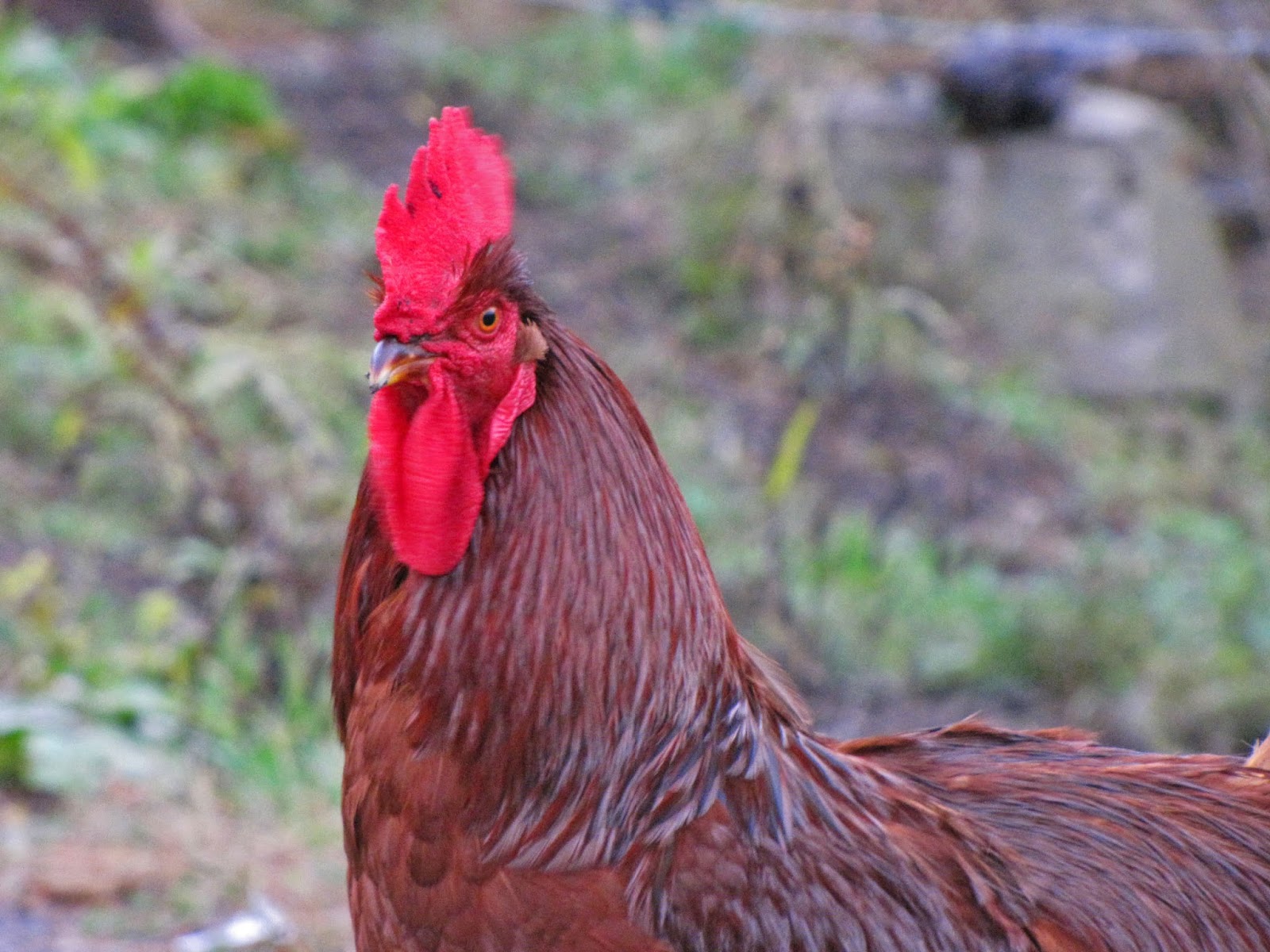
These guys are the jack of all trades. Originating from New England, they are very cold hardy, but can handle heat as well. They are great layers of large brown eggs, and very meaty birds for the table. Rhode Island Reds are decent free-rangers but will still need some supplemental feed, even in the summer and fall months. Roosters are extremely strong and protective of the flock, but this also means that they tend to be aggressive. Make sure children know to avoid the rooster and what to do if it becomes aggressive toward them. Hens are mildly broody, meaning they will hatch and raise chicks occasionally. 
Heritage birds (from a breeder) are desired over hatchery stock for this breed. Hatchery stock Rhode Island Reds (also called "production reds") have been bred for excellent egg-laying, sacrificing broodiness and size, so they are less desirable for dual-purpose uses. However, hatchery stock will still be good enough for the average prepper. Mine come from hatchery chicks! This would be an excellent breed to make up the bulk of your flock. 

2. American Game


American Games are the fighting fowl of the US. These beautiful birds are probably the toughest common chicken you can get! They are extremely flighty, and can evade most predators with relative ease. Their wings and tails are very long in comparison to their body size, making them perfectly equipped for flight! What they can't fly away from, they will fight. Because females often grow spurs as the males do, they are a force to be reckoned with to predators. Females are also excellent mothers, going broody and raising chicks several times during the hatching season. They protect these chicks with ferocity. 

In addition to being very good at protecting themselves and their young, this breed is very hardy and self-reliant. They can handle both heat and cold very well, can eat almost exclusively through free-ranging. Owners of this breed find that they often prefer to roost in trees rather than in coops, no matter the weather! They are practically wild birds, and can adapt to most any climate. They can have a pea comb or a single comb. Pea is preferred in cold climates, while single may be better in hot climates. 

The hardiness of this breed comes at a cost. They are not bred for production, so hens lay less than 100 eggs a year. Though they are muscular, they weigh less than five pounds, not making them much of a meat bird. In addition to that, these birds are born and bred for fighting and are very aggressive. Males can not be kept in confined environments with other males. Because of this, games should not make up a big part of your flock. Due to their flightiness and aggression, games are not ideal for beginners. 

3. Plymouth Rock


Stocky and cold-hardy, Plymouth Rocks are my personal favorite dual-purpose bird. They lay almost as well as the Rhode Island Red, but lay slightly smaller eggs and may lay a little less per year, especially comparing hatchery stock. They make up for it in their meat, however. Plymouth rocks are heavy, meaty birds. Both male and female can dress out at a decent size, and make for a tasty roast! Males are fairly protective, and not very aggressive. Females are moderately broody, and their size means that they can hatch a lot of eggs at a time.
While they will free range, their size requires that they have a lot of feed to supplement what they find.  This also means that they are poor flyers. 
Plymouth Rocks come in a lot of difference colors. Especially for free ranging flocks, barred or partridge colored varieties are best. White is the most easily spotted by predators, but the white pin feathers look better for butchering than that of darker birds. 

4. Orpington


Orpingtons, the pillow-pet of chickens. You can thank England for this fluffy breed, where they were developed into the excellent dual-purpose bird that they are today. They do fairly well in free-ranging, but will still require some feed, all seasons. Some people prefer Orpingtons over any other breed as a mother to chicks. They are very large, so a lot of eggs can fit under a hen. This breed also has an extremely calm, friendly temperament, making them a common pick for families with children. Roosters are generally not extremely protective, however. This breed is particularly cold hardy.
These birds have been bred for both eggs and meat, and lay medium to large eggs. Because they are a heavy breed, so each bird will have a hearty amount of meat for butchering. The most common color is buff, but they come in many more solid colors as well as patterns!

5. Leghorn


Sometimes pronounced "leg-horn", sometimes pronounced "leggern," Leghorns lay most of the eggs you see in the grocery store. This is because they are able to produce very large eggs, while their small bodies require significantly less food. In addition to laying lots of eggs on little food, they are great at free-ranging and excellent flyers! The brown variety of leghorn will be less susceptible to predators than the more common white. Males are known to be protective and are prone to aggression. They are generally not a mothering breed, however. They go broody very rarely. 
Leghorns will do very well in hot environments, but may do poorly in colder climates. Their large, floppy combs are prone to frostbite in the extreme cold. 

6. Easter Egger


The Easter Egger (often abbreviated 'EE') is not a true breed, but rather a mix of a blue laying breed, usually an Ameraucana or Araucana, with a brown or white layer. They generally lay blue or green eggs, but can lay pink, brown or cream as well. Hatcheries often label Easter Eggers as "Americana" to fool people in to thinking they are getting a great deal on the rare and expensive "Ameraucana" when they are, in fact, getting a mixed-breed bird. 
Nonetheless, Easter Eggers are inexpensive and extremely hardy birds. They are not very big chickens, but very resilient. They can handle heat or cold, but can deal with extremely cold temperatures better than most. An excellent choice for a northern prepper, EEs are great free-rangers and generally come in camouflaging patterns. They are mildly broody and make good mothers. They are a good layer of medium to large eggs that can be any color, but are most often blue or green. 
Easter Eggers are generally known to be quite friendly birds, but it can depend on the breeds a specific hatchery or breeder used in their birds' development. 

Breeds to avoid

There are plenty of birds not mention in my list that will do just as well as the above birds in a doomsday situation. However, there are a few you should probably avoid. 

Sebright


This breed is often in bantam bins at feed stores. They are striking in appearance which makes them tempting, but your main flock is best without them. They don't lay much, sometimes only laying a total of 4-6 weeks out of the whole year. They don't generally go broody, and they aren't particularly weather-hardy. Males have "hen feathering" due to a mutation that mutes the testosterone receptors in their skin that cause most roosters to have long, pointed, shiny hackle and saddle feathers. This mutation has led to reduced fertility among male Sebrights. They can, however, fly better than most chickens and mine do very well in a free ranging environment (guilty as charged, I have two.)

Silkie


Another I am guilty of owning. Silkies are an Asian breed of chicken that lack 'hooks' on their feathers. This causes the feathers to appear fluffy, as if the chicken has fur. Unfortunately, this mutation causes a lot of problems for the Silkie. They are unable to fly because their wings and tail cannot catch wind. They also cannot handle cool or windy weather very well. Normal chickens stay warm by trapping air between their feathers and their skin. That air is warmed by their body heat, and insulated by their feathers. Silkies' feathers don't do this very well. They also are not water resistant like a normal chicken's feathers, so they get soaked to the skin any time they get wet. 
Silkies do have a very calm demeanor, do well in confinement, and are good at raising young. They
may be a good option if you needed to keep a chicken indoors. 

Anything "frizzled"

It may be tempting to buy these adorable chickens that look like their feathers are permanently ruffled. However, they run into the same problems as Silkies. Those up-turned feathers are unable to insulate body temperature, making both excessively hot and cold weather difficult for them to handle. 

Polish


I personally do love the appearance of these goofy looking birds, but they aren't the best for a prepper. They lay modestly, but generally stop completely in the winter. They rarely, if ever, go broody. Polish could be good free-rangers, if it weren't for their giant crests making them predator bait. The crest blocks out most of their sight, making them unable to see any aerial predators. They also run into problems with other chickens who have not been raised with crested birds. They will peck at the crest, thinking they're getting some funny thing off of their flockmate's head, but they're actually scalping her. 


Your own flock

The best flock for a prepper is a varied one. As generations go on, the flock will combine their genes to produce well-rounded and diverse offspring, allowing you to continue your food source for a very long time. The chickens I specified are my personal top picks, but what you like or need may depend on your unique situation. Always do research on a breed before buying to see if it will fit in to your life! 


All images used in this article are either Public Domain, or owned by myself. 

Saturday, June 20, 2015

Breed Focus: Rhode Island Red

One of the most popular layers in the US and Rhode Island's state bird, this all-American breed is one of the first things to come to everyone's minds when they think of a chicken.


History of the Rhode Island Red Chicken

Developed in the late 1800s in Rhode Island and Massachusetts, this bird is considered the best American breed of poultry by many people. Originally, the Rhode Island Red had a deep mahogany color red feathers. This beautiful set of feathers were thanks to the Malay chicken, which was one of the breeds used to develop the Rhode Island Red. Other birds used included Asiatic Cochins and Brown Leghorns, for carcass size and egg laying capability. The purpose of this chicken was to have a significant amount of eggs, while dressing out as a nice carcass for the table. In 1902, the breed was admitted to the Standard of Perfection with the single combed variety, and the rose combed variety being admitted soon thereafter. 

Characteristics of the Rhode Island Red Chicken

Heritage Rhode Island Reds are most known for their dark mahogany feathers, though most hatchery-quality birds today have a lighter red colored feathering. They can have either a single comb or a rose comb, though the single combed variety is much more popular. Hens weigh around six pounds fully grown and lay brown eggs, while cocks weigh in at about 8 pounds. Heritage-type Rhode Island Red hens are likely to go broody, while production-type birds have had it almost completely bred out. 
Rhode Island Red cocks are known to be on the aggressive side, but fiercely protective of their hens. However, personality varies based on birds, so there are docile RIR cocks as well.
These birds are excellent for small farms. They lay extremely well for a dual-purpose bird and can handle inadequate conditions better than most breeds, though it is not recommended. Being developed in New England, they are also cold tolerant and often lay in the winter. 
Because hatchery-type Rhode Island Reds (also called production reds) are not bred to the Standard or Perfection and may have blood of other breeds in their heritage, their characteristics may vary. Production-type Rhode Island Reds are more common than the heritage-type birds.

Is this breed for you?

If you want to have a few birds that lay extremely well, even daily, but are more cold hardy than the White Leghorn, this may be the bird for you!  They can do well in a thrown-together DIY coop, as long as there is ventilation and protection from drafts in the winter. If you want a broody hen, you may want to opt for the heritage type or add a single hen of a broody breed, such as an Orpington or a Silkie hen. Though they can be friendly, Rhode Island Reds, for the most part, are  not as fond of affection as some other breeds, so they may not make the best pets. If you don't want loving pet chickens, but a respectable layer and a decent free-ranger, the Rhode Island Red is certainly a breed to consider!

Sources and Links:

Friday, February 6, 2015

Starting an Urban Flock

The Urban Flock - Getting Started

If you live in the city, you may think that you can't have chickens. However, that is not necessarily true. Most cities have a four to six hen maximum, given there are no noise or odor complaints from your neighbors.

Why get chickens?

There are plenty of reasons to get chickens. They control bugs (especially those pesky slugs!), they produce fertilizer for your garden, provide feathers for any crafting uses, and, of course, they lay eggs! Chickens also make good pets. They are comical and are fun to watch as they peck around, bach-bach-baching at each other! Chickens may be a wonderful addition to your family!

So, you want some chickens?

Chickens are a delightful addition to your backyard, but there are a few things to consider before you get chickens. 
The first is to check with local laws, to know how many chickens you can have, how you must house them, and any other laws pertaining to poultry. If you live in a community with a Home Owners Association, make sure chickens are allowed and it is okay with your neighbors!
 Keep in mind that all those things that chickens do, providing bug control, feathers, and eggs, is not free. Especially in start up costs, you have to rake out the cash!
 Then, decide where you will keep your chickens, and how many chickens you have room for. Housing suggestions for chickens is four square feet of coop space, and 10 square feet of run space per chicken. The coop is where your chickens will sleep, lay their eggs, and be sheltered in severe weather. The run is where they will eat, dust, and spend time outside. 
Once you've measured how much space you have, and how many chickens you can keep in that space, it's time to plan your coop! You can buy a pre-made coop online or at a feed store, or you can build your own chicken coop! I made my chicken coop out of an old playhouse that was no longer in use! 
So, ready for chickens now? Hold on, there, we've got a couple more things to cover. 

You need some supplies!

In order to start your flock, you'll need some supplies! 

A feeders and waterers
A brooder (if you're getting chicks) (this can be done with a plastic tote and a desk lamp)
Extra bulbs for your brooder
Chicken feed (or medicated chick feed)
Bedding (I prefer straw and pine shavings)
Nesting boxes (if your coop doesn't have them already)
Grit (crushed up rocks, you can get it at a feed store)
Something to clean the coop with (I prefer the snow shovel)

And that's the basic stuff. 

How are you going to get them/ what breeds?

You can get chickens from a feed store in the spring, or you can order them online from hatcheries. There are pros and cons to both.

Feed store:
Pros:
Easy, no-hassle. Buy your chicks and leave.
Convenient, you likely have a feed store close to you.
You can see your chicks before you buy, you can see any obvious problems. 

Cons:
Often mislabeled breeds by staff
Often poor variety of breeds
Chicks are exposed to the public, may contract illness

Directly from Hatchery:

Pros:
Huge variety of breeds.
Keep better track of labeling.
Chicks are shipped directly to you, without exposure to the public. 

Cons:
May be inconvenient due to shipping rates and minimum order size.
Must plan orders with hatch dates.
You cannot see if there is something wrong before you buy your chicks. 

*Remember, when buying from a hatchery, be sure to notify your post office that you are expecting live poultry and be available to pick them up as soon as they come in. 

What should you get?
There is a huge variety of chicken breeds out there, but not all may suit your family. What you should get depends on what you want, and your situation. 

For egg production:
Red Sexlinks. A hybrid of a red rooster and a silver hen, these birds are egg laying machines. They are known to lay an extra large brown egg almost every single day! If you can only have 3 birds, that is still plenty of eggs for an average sized family! They are called Red Sexlinks because they can be sexed by the color of their down at hatching. Males grow to be white, females are buff to red with white undertones. They are also known as Golden Comets, Red Stars. Cinnamon Queens, Golden Buffs, and many other names. 
Black Sexlinks. Similar to the Red Sexlinks, they are a cross between a red rooster and barred hen. Male black sexlinks are barred, females are black with red feathers on their head and chest. 
Buff Orpingtons: A calm, fluffy breed, they are very popular. Their gentle personalities make them popular choices for families with young children. They go "broody" often and are excellent mothers to their chicks. 
White Leghorns: These flighty white birds are the top egg producer in the United States. They are the layers of the large white eggs that you get at the grocery store. 

For pets:
Silkies: These are one of the most popular pet chickens. They appear to have fur rather than feathers, and are quite small in size. Kids love the fluffy "cottonball" appearance. They also make excellent mothers. They come in many colors including white, black, buff, and blue.
Cochins: These fluffy birds come in both Large Fowl and Bantam sizes. They are popular pet birds, and lay more eggs than many ornamental breeds. You may expect 3 eggs a week per bird, though some report having more. 
Easter Eggers: Green eggs and ham? These hybrid birds are a kid favorite. They come in bantam and large fowl sizes, and lay blue to blue-green eggs. They have the blood of several different breeds in them, including the Ameraucana, which they are often confused with. 
Polish: These ornamental birds are known for the somewhat silly appearance of their crests. They appear to have an 80's "teased" hairdo, and are quite the beautiful bird. They come in many colors including Gold and silver laced (black), and buff laced (white). 

And that's just to name a few! There are tons more breeds that could suit your family! 

What to do when you get your chicks.

Chicks have to stay warm, but must avoid getting too hot as well. It's best to keep them in your house, in a brooder.
My brooder is simply a large plastic tote with a desk lamp clipped to the side, at an angle that the chicks can get away from it. Place a small bowl of water with pebbles in the bottom to make sure they won't drown if they fall in!
Your chicks need to stay in until they're feathered, which is around 6-10 weeks.

Help! My chicks are flying out of the brooder but they're not fully feathered!
Flight feathers and tail feathers are the first to come in - and be fulling functional. Our simple solution was to put an old screen from a window on top of our brooder. Put something mildly heavy on top of it so they can't move it. Consider your carpet saved!

When do they start laying eggs?!

Congratulations! You raised your babies and they are now young pullets. Depending on the breed, they should start laying between four and six months of age! 
But don't you need a rooster to get eggs?!
No. You do not need a rooster for the hens to lay eggs, but you do need a rooster to fertilize them if you plan to hatch your own eggs. I do not suggest getting a cockerel with your initial chicks, and you likely are not allowed to have one in an urban/suburban setting. Roosters come with their own set of possible problems to run into, and it's best to avoid that while you're starting out. 

Have fun!

If you can take care of your dogs or cats, you can take care of chickens. They're not difficult to care for, but take just a little responsibility. Your kids will learn the value of the work they put into something, and the food that comes from that work. You will find yourself entertained by the dumb little things you'll see your chickens do. You'll know that your eggs come from your chickens, that are treated well and nourish your family. Enjoy your chickens!

Resources:

Hatcheries:
Meyer Hatchery (OH) https://www.meyerhatchery.com/
Ideal Poultry (TX) http://www.idealpoultry.com/

Chicken websites:

One of my red sexlink hens. They are superb layers!