Showing posts with label farming. Show all posts

Monday, May 30, 2016

Breed Spotlight - Cayuga Duck


Image Source: Wikipedia Commons

The Cayuga duck is an American breed of duck, originating from the state of New York. This breed is characterized by it's black feathers, which are iridescent  in the sun. They are among the oldest American duck breeds, and have been fairly popular since the mid 1800s. 


Traits of the Breed

Image Source: Wikipedia Commons
The Cayuga duck has black feathers, with a beetle green iridescence in the light. They are as close to solid black as it gets - their bill and legs are black, and their eyes should be very dark brown. This medium-sized breed weighs between 7 and 8 pounds, and are a dual purpose breed, once being the most popular duck for meat before the Pekin was imported to the US. One reason this breed is desired among backyard keepers is the eggs that they produce. High-quality ducks produce black eggs, although they slowly fade to light grey as the female's egg cycle progresses. Cayugas are known for being good foragers, but also being quieter than other breeds such as the Pekin, making them a good choice for the urban duck enthusiast. Male Cayugas are frequently mute!


History

The history of the Cayuga duck is fairly unclear. The breed originated in the state of New York and is named after Cayuga Lake, of the Finger Lakes region. One theory states that a miller in Duchess County found a pair of black ducks on his property, and bred them to get the Cayuga breed. Experts disagree, and say that there is no evidence to support this claim. A more likely theory is that the breed derives from the English black duck, which were once popular in England. These black ducks were then bred to mallard ducks, leading to the breed as we know it today. Although the origin is still unknown, it is most likely that the Cayuga originated from these domestic black ducks, rather than mutated wild populations. 

Cayuga ducks became less popular when the Pekin was imported from China, as their black feathers made their carcass less desirable on the table than the Pekin's soft white. The Cayuga is making a comeback as backyard enthusiast are often attracted to their beauty and novelty over the utility of other breeds. 

Where to get them

As Cayugas have become common among backyard farmers, they are available at most large hatcheries that sell ducks. For the best, show-quality and darkest eggs, you should buy them from a breeder with stock proven in shows, who will show you his/her birds' eggs before you buy the ducklings. 
Hatcheries:

Sources:"The Livestock Conservancy." The Livestock Conservancy. The Livestock Conservancy, n.d. Web. 30 May 2016. <https://livestockconservancy.org/index.php/heritage/internal/cayuga>.

"Cayuga Duck." Wikipedia. Wikimedia Foundation, n.d. Web. 30 May 2016. <https://en.wikipedia.org/wiki/Cayuga_duck>.

Sunday, March 13, 2016

Feed Store Chick Buying Guide

While feed stores make it very easy for the average person to obtain chicks to raise their own flocks, they have many different breeds of many different uses. To make matters more confusing, feed store staff often do not specialize in poultry and can't offer much help as to the breed and their uses. Every spring, chicken forums and facebook groups are flooded with posts trying to figure out what breed or gender their chicks are, because they just got whatever their feed store had. With my guide, learn to get the breeds you want, leave the ones you don't, or find out which ones you already have!

For Part 2: Choosing Healthy Chicks, Click here!

If the bin says "Red Sexlink (or Red Star, Golden Comet, Golden Buff, Cinnamon Queen, Isa Brown)"

The red sexlink is not a true breed, but a hybrid of a red male (such as a Rhode Island Red) and a silver-gene female (often a white leghorn with a silver gene). This causes them to be sexable at hatching, via their down color. The exact genetic background of these birds can vary depending on the hatchery. Because they are a hybrid, there isn't a standard that hatcheries have to follow, so there are many varieties and many names to describe them. However, hatcheries breed this bird to be the best-of-the-best in laying. They are practically laying machines. If you're looking for super huge eggs and a whole lot of them, this is for you! I have several! They are often in pullet assortments. Males grow to be white with creamy-colored hackle feathers and reddish feathers on their wings, while females are red with white down. 
Red, one of my red sexlink hens

If the bin says "Black Sexlink (or Black Star)"

Like the red sexlink, this bird is a hybrid bred to be sexed by it's down color. They are a hybrid of a red male and a barred female, usually a barred Plymouth Rock. It also has several different names that are often used to label them. Males of this hybrid grow to be barred, while females are black with red leakage around the neck and breast. They lay very well, and are known for a calm temperament. 

If the bin says "Pullets"

Pullets are not a breed of chicken. Pullets are young female chickens, so the pullet bin is full of laying or dual-purpose breeds that are female. The most common breeds in pullet assortments are red sexlinks, black sexlinks, White Leghorns, and Rhode Island Reds or Production Reds. However, you may also get Buff Orpingtons, California Whites, Plymouth Rocks, or Black Australorps. Sometimes there may be easter eggers. All of these have been sexed to the best of the hatchery's ability, but there may be a male or two in the bunch. 

If the bin says "Production Red"

The production red is sort of like the commoner's Rhode Island Red. They are lighter in color than the RIR, generally lighter in body weight, and taller. Basically, hatcheries bred their RIR stock purely for laying, some breeding in genes from other breeds such as the white leghorn, that they no longer could sell them as Rhode Island Reds. Most hatchery-bred Rhode Island Reds could be considered production reds. They can vary in color from light red to dark red, and are excellent layers. If you're looking for layers, these birds would be perfect. If you're looking for show, these birds will be disqualified.

If the bin says "Cornish Cross (or Cornish Rock)"

These chickens are specifically meat birds. That is their purpose. It is inadvisable to buy these birds, often coined "frankenchickens," because they can rarely live past processing age. If they do, they don't live as long, they don't lay well, and they can have damage to their legs due to their excessive weight. We've all heard stories about people saving these and raising them as pets, but there are far more (less interesting) stories about them flopping over with heart attacks or legs breaking under their massive weight. Sometimes these birds get mixed up in bins of white Plymouth Rocks or Leghorns, but they are usually twice the size of the normal chicks. If you're looking for a pet or layer, do NOT buy these chicks. 

If the bin says "Red Ranger (or Freedom Ranger, Dixie Rainbow)"

These birds were developed in France to replace the Cornish cross, so they are a meat bird. However, unlike the cornish cross, they are not so heavy and do not grow so fast that it causes heart attacks and broken legs. They are better at free-ranging and are actually able to breed on their own. They may make a decent pet bird, but do not lay well. They are often confused with red sexlinks, due to similar appearance and coined names, but they are very, very different! 

If the bin says "Americana (or Ameraucana, Easter Egger, Araucana)"

These are not Ameraucanas, I can almost guarantee it. Ameraucanas and Araucanas are very rare and expensive birds, and hatcheries often label Easter Eggers as such to trick people into buying them. Ameraucanas and Araucanas have a very specific and strict breed standard and only a handful of accepted colors and cost upwards of $20 a chick! There is not such bird as an "Americana". If you're getting them from a feed store for $2.99, they are Easter Eggers. Easter Eggers are a hybrid chicken between a blue-laying bird and a brown-laying bird, in order to produce a variety of colored eggs. They can lay blue, green, pinkish, or brown eggs, sometimes even white, depending on the breeding practices. There is nothing wrong with Easter Eggers, as they are very hardy, friendly, and provide those beautiful blue eggs at a price that everyone can afford! The blue gene does not breed true with these birds, however, so the second generation will lay brown eggs as well as blue. 

If the bin says "Assorted Bantams"

Bantams are not a breed of chicken, but a size of chickens. Some breeds are a "true bantam," meaning there is no standard sized version of them. Some are smaller versions of standard breeds. Some true bantams that may be in these bins are Sebrights (golden and silver), Japanese Booted Bantam, and Silkie (which are a true bantam in the US, but not Europe). Smaller versions of standard breeds that may be in these assortments include Bantam Cochin, Olde English Game bantam, and Bantam Wyandotte. It is the hatchery's choice what to put in these assortments, so it could really be any bantam breed that they hatch! These assortments are generally straight run, or unsexed, as bantams are even more difficult to sex than standard chicks! 

If the bin mentions a specific true breed (Plymouth Rock, Orpington, Rhode Island Red, Wyandotte, Australorp, Marans, Brahma, etc.)

This will generally be the breed that is stated. On occasion, there is a mix up, but it's usually not drastic and isn't as common. Just research the breeds you want, and if you see them at the feed store, grab them up before they're gone! 


It may be confusing to buy from feed stores, but hopefully, I helped make it a little easier! Remember to follow us on Facebook! We also post regular updates on Instagram of our own feathery family! 

Saturday, June 20, 2015

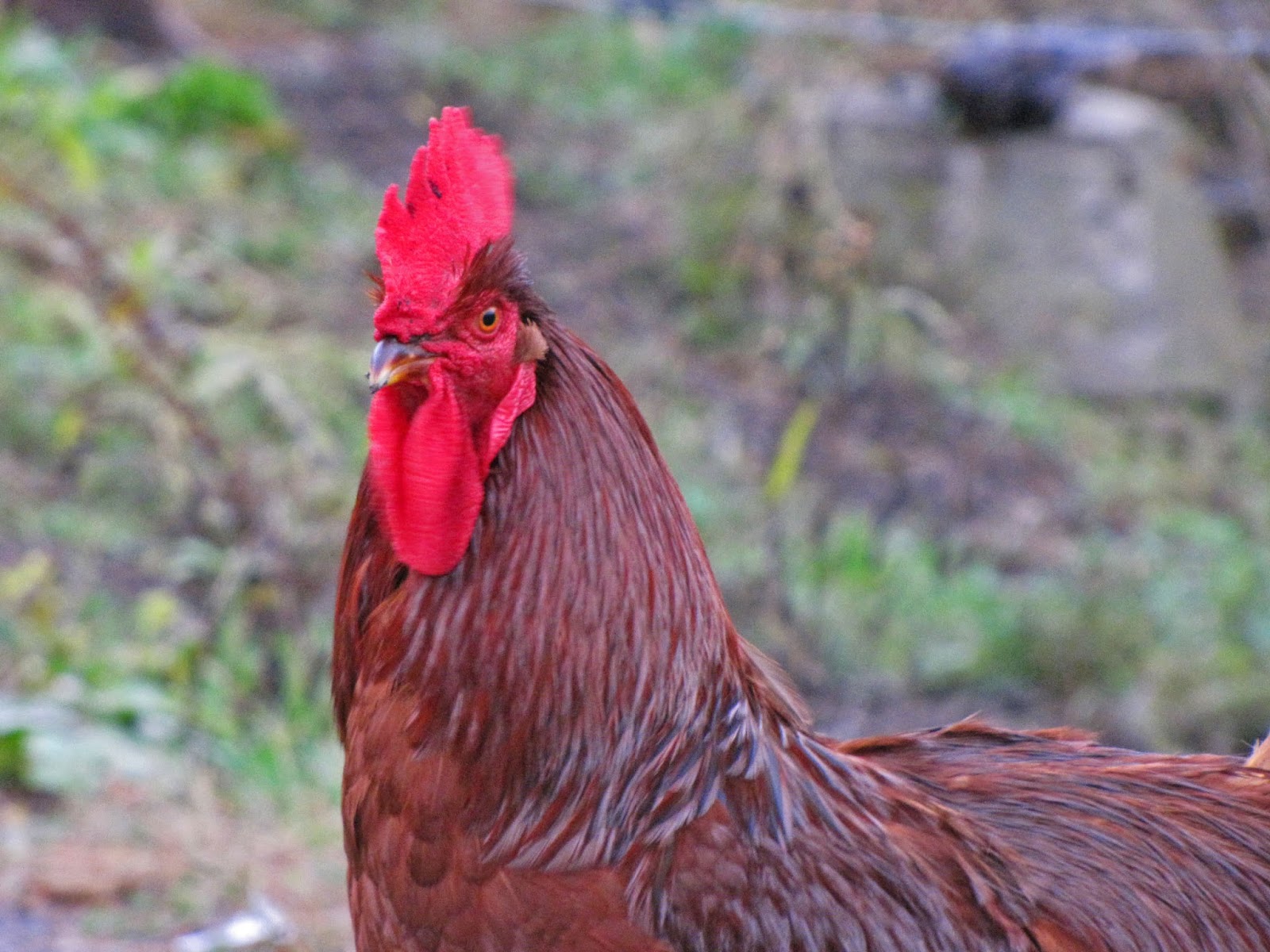
Breed Focus: Rhode Island Red

One of the most popular layers in the US and Rhode Island's state bird, this all-American breed is one of the first things to come to everyone's minds when they think of a chicken.


History of the Rhode Island Red Chicken

Developed in the late 1800s in Rhode Island and Massachusetts, this bird is considered the best American breed of poultry by many people. Originally, the Rhode Island Red had a deep mahogany color red feathers. This beautiful set of feathers were thanks to the Malay chicken, which was one of the breeds used to develop the Rhode Island Red. Other birds used included Asiatic Cochins and Brown Leghorns, for carcass size and egg laying capability. The purpose of this chicken was to have a significant amount of eggs, while dressing out as a nice carcass for the table. In 1902, the breed was admitted to the Standard of Perfection with the single combed variety, and the rose combed variety being admitted soon thereafter. 

Characteristics of the Rhode Island Red Chicken

Heritage Rhode Island Reds are most known for their dark mahogany feathers, though most hatchery-quality birds today have a lighter red colored feathering. They can have either a single comb or a rose comb, though the single combed variety is much more popular. Hens weigh around six pounds fully grown and lay brown eggs, while cocks weigh in at about 8 pounds. Heritage-type Rhode Island Red hens are likely to go broody, while production-type birds have had it almost completely bred out. 
Rhode Island Red cocks are known to be on the aggressive side, but fiercely protective of their hens. However, personality varies based on birds, so there are docile RIR cocks as well.
These birds are excellent for small farms. They lay extremely well for a dual-purpose bird and can handle inadequate conditions better than most breeds, though it is not recommended. Being developed in New England, they are also cold tolerant and often lay in the winter. 
Because hatchery-type Rhode Island Reds (also called production reds) are not bred to the Standard or Perfection and may have blood of other breeds in their heritage, their characteristics may vary. Production-type Rhode Island Reds are more common than the heritage-type birds.

Is this breed for you?

If you want to have a few birds that lay extremely well, even daily, but are more cold hardy than the White Leghorn, this may be the bird for you!  They can do well in a thrown-together DIY coop, as long as there is ventilation and protection from drafts in the winter. If you want a broody hen, you may want to opt for the heritage type or add a single hen of a broody breed, such as an Orpington or a Silkie hen. Though they can be friendly, Rhode Island Reds, for the most part, are  not as fond of affection as some other breeds, so they may not make the best pets. If you don't want loving pet chickens, but a respectable layer and a decent free-ranger, the Rhode Island Red is certainly a breed to consider!

Sources and Links:

Wednesday, March 4, 2015

Feed: Organic or Conventional?

If you've been on any online forums that have to do with food, you've probably seen people arguing about this subject. Organic vs. Normal feed. So, what's the hype? We're going to sift through some evidence, decide which is credible, and hopefully help you decide what is best for your situation!

What is the definition of "organic"?

According to the FDA, farmers labeling foods as "organic" must raise and grow their crops with no herbicides or pesticides,  use manure or compost as fertilizer, and must feed animals feed made from plants matching that description. Organic foods must also be non-GMO (not a genetically modified organism).

Organic Feeds - Common arguments

  • GMOs make animals and people sick
  • Pesticides never leave the plant
  • Organic foods are healthier
  • Conventional farming harms the environment
  • "Normal" feeds contain antibiotics 
  • Pesticides and herbicides leave residue in eggs
  • Animals in conventional farms are treated poorly, better in organic farms

Conventional Feeds - Common arguments

  • It is more practical to use conventional feeds
  • Medicated chick feed can prevent chicks from dying 
  • Conventional feeds can be produced at a much higher rate 
  • There are more viable options with conventional feed
  • Organic is a "fad" food 
  • Pesticides do not hurt the ecosystem much 
With all of this information, we need to be open minded, yet skeptical about the source of people's information. What sources are credible? Let's first eliminate what statements are completely or partially false. 

Statements on Organics

"GMOs make animals and people sick"
There is no credible evidence that GMOs are worse for consumption.
"Organics are healthier"
According to Stanford University, organic foods are not any different from their conventional counterparts nutritionally. Even organicfacts.net, an advocate for organic foods, admits that there is little evidence in favor of the belief that organics have health benefits.
"Normal feeds contain antibiotics"
Some commercial feeds contain antibiotics, though it is closely regulated by the government. Store bought conventional feeds (Purina Layena, Dumor feeds, etc.) do NOT contain antibiotics. Some chick feeds contain small amounts of antibiotics, because chicks are susceptible to many types of bacteria while their immune system is still developing.
"Normal feeds leave pesticide residue in eggs"
There is a pesticide residue on the feed, but not enough to affect the egg.

Statements on Conventional feed

"Organics are a fad"
This is partially untrue, as technically, today's conventional farming developed within the past century. "Organic" farming has taken place throughout most of human history/
"Pesticides do not hurt the ecosystem much"
The chemicals used in farming can be pretty bad for the environment, especially once they reach water. Runoff can be devastating to the ecosystem of ponds and lakes, killing tons of fish at a time. It can take a long time for the ecosystem to recover. 

So what is true?

Now that we've debunked the incredible information, let's go on to the supporting information!

Organics - Supporting Information

"Animals in organic farms are treated better than those in conventional farms"
This is true, for the most part. Organic-raised cattle, goats, sheep, etc. must have access to pasture during the grazing season. Conventional farms have them kept in cramped areas, fed only feed, and unable to perform natural behaviors. Organic chickens cannot be kept in battery cages. When buying animal products at a store, organics are clearly the more ethical choice.

"Pesticides never leave the plant"
This is partially true. If pesticides or herbicides are used on a plant, there will be some residue on the plant when it gets to your table. There is little evidence suggesting that this is very harmful, but many families don't like the thought of it. 

In order to sell your eggs as organic, you must feed your chickens organic feed. Being able to legally consider your eggs organic can get you two more dollars by the dozen of eggs. To many, this is worth an additional $7 on a bag of feed. 

Conventional feeds - Supporting information

"It is more practical to use conventional feeds"
Conventional feed is much, much cheaper. Because the risk is incredibly low and possibly nonexistant, many chicken owners find that it makes more sense to use conventional feeds (without antibiotics). 
"Medicated chick feed saves lives"
It is not uncommon for chicks to die. It's natural selection, the ones with the strongest immune systems live to reproduce. Unfortunately, when you only have six chicks, for of them getting sick and dying means a big loss. Medicated chick feed and assure that the most possible chicks will survive. By the time they lay an egg or are ready to be processed, the antibiotics are long out of their system. 
"There are more viable options with conventional feed"
In conventional feed, there are a lot more brands to choose from, with more competitive prices. If you feel that one company does not have proper nutrition, there are tons of other options in the same feed store. 

Conclusion: Organic or Conventional?

As far as whether or not organic food is better for you? The answer is most likely no. Raising your chickens solely on organic feed will most likely not benefit them or you as opposed to feeding them conventional feed. However, choosing organics over conventional foods is much better for the environment and much more ethical. Organic feeds have not contributed as much to the pollution of aquatic ecosystems, and other organic foods do not contribute to animal cruelty. Buying organic is a  decision of ethics, rather than health. Ultimately, it is your decision as to what is best for your family and your livestock. Both organic and conventional feeds are viable, realistic options. 

Sources and links: