Showing posts with label farm. Show all posts

Monday, April 4, 2016

Should Raw Milk Be Legal?

Most US states currently do not allow retail sale of unpasteurized (raw) milk, some barring it completely. Some states allow for the sale of raw milk to be allowed through herdshares, where customers pay for a share in a herd and receive their milk like a subscription. Those in favor of the sale of raw milk believe that it has certain health benefits, and that raw milk poses no significant health risk. Those who oppose it claim that it is too great a health risk, and that customers may not understand the risks of the drinking raw milk. So should raw milk be legal?


What is Pasteurization?

Pasteurization is the process of slowly heating milk to kill bacteria that could be contaminating it. It was developed by French scientist Louis Pasteur during the Victorian Era, and became routinely used in the US in the 1920s. The purpose of this was to reduce the number of foodborne illness caused by dairy, and is known to have been a great success. 

Potential Risks of Raw Milk Consumption

CDC and FDA data show that unpasteurized milk is significantly more likely to cause foodborne illness than pasteurized milk. The CDC reporting 1,571 known cases of foodborne illness were caused by raw milk between 1993 and 2006, and of those illnesses, 202 required hospitalization and 2 resulted in death. 60% of foodborne illness caused by dairy was due to raw milk, a disproportionate number considering how only a small percentage of the population drinks unpasteurized milk. The infections caused by raw milk were also more severe than those caused by pasteurized milk. Sanitary conditions can help reduce contamination of the milk, but cannot eliminate it entirely. Given this information, the CDC concludes that you are 150 times more likely to contract foodborne illness from unpasteurized milk than pasteurized milk. 

The CDC and American Academy of Pediatrics especially advise against giving raw milk to young children, as they are particularly susceptible to some of the bacteria that unpasteurized milk may be carrying. Pregnant women, the elderly, and anyone with a suppressed immune system should also avoid raw milk, the CDC says. 

Claimed Benefits of Raw Milk

Many people believe in the power of a glass of raw milk!
Many people believe that raw milk is more nutritionally complete because the pasteurization process destroys fat molecules, enzymes, vitamins, and minerals that exist naturally in the milk. Advocates of raw milk say that it improves hair, skin, and nails, reduces allergies, helps increase bone density, and builds a strong immune system, among other things. They claim that raw milk has more fat soluble vitamins than that of pasteurized milk, and that is is higher in the fatty acid butyrate, which studies suggest can help people with Chrone's disease. Unpasteurized yogurt and cheeses supposedly have more probiotics than their pasteurized counterparts, theoretically making them better for the digestive system. 
An article on DrAxe.com, a website dedicated to healing through food, claims that pasteurization reduces the levels of vitamins and minerals in milk significantly. According to doctor of natural medicine Josh Axe, 66% of iron, 70% of zinc, 38% of B-complex vitamins and up to 70% of vitamin C are destroyed by pasteurization. In addition to vitamins, Dr. Axe says that important enzymes are destroyed once the milk is heated. Since many Americans do not get their recommended daily vitamins and consume a lot of pasteurized dairy, many raw milk drinkers attribute their health benefits to raw dairy. 

Legal Argument Against Raw Milk

Even healthy, free ranging cattle can carry disease
People against raw milk sales argue that it is a public health risk. This is backed up by the CDC's data that says raw milk is more likely to cause food poisoning, which can result in death. They also note that 75% of milk-related food poisoning occurred in states that allow the sale of raw dairy, solidifying the link between foodborne illness related to said dairy. The majority of people who fell ill from raw dairy were under 20 years old, suggesting that unpasteurized milk is more dangerous for younger people who may not know the risks of drinking it. 
Large factory farms produce the majority of milk to the general public, and it is nearly impossible to keep things totally clean in such large farms. They could easily take advantage of legalization and risk the safety of the public to make a profit by skipping pasteurization. If raw milk were sold on such a large scale, outbreaks could be much larger, threatening the whole of public health. According to the CDC and FDA, even if conditions are kept perfectly clean, it does not eliminate the risk of contamination because livestock carry
bacteria all over their skin. 
According to FDA research, pasteurization does not significantly reduce most of the vitamins in milk, and of those that are reduced, milk is not a good source of anyway. Their research also suggests that the enzymes that are deactivated during the process are not necessary to digest the milk and are not beneficial to human health. The reduced risk of foodborne illness outweighs the slight reduction in vitamins. They say that the claims of benefits from drinking raw milk are purely anecdotal, and that people are being mislead into believing they are fact. 

Legal Arguments in Favor of Raw Milk

Many advocates of raw milk claim that unpasteurized dairy is not dangerous when done cleanly, and agencies like the CDC and FDA manipulate statistics in order to maintain an anti-small-farm agenda. For example, rather than stating the actual chances of getting food poisoning from raw milk, they say that you are 150 times more likely to get sick from it than pasteurized milk. Considering that your risk with pasteurized milk is almost nonexistent, chances of raw milk causing illness in an individual is still too low to consider it dangerous. Others believe that the government simply should not have the right to decide what kind of food they can and can't buy. They believe, when it comes to their own health, they should be able to do their own research and make that decision themselves.

People in favor of raw dairy also note that, while the CDC recommends against raw milk, they advocate or do not wholly advise against many other potentially dangerous activities. For example, approximately 117 infant boys die due to complications with circumcision surgery per year in the United States alone. That number dwarfs the 2 deaths in thirteen years from unpasteurized dairy, yet the CDC formally recommends infant circumcision to parents. There are also 88,000 deaths caused by alcohol each year, yet is perfectly legal to sell, with a license of course, in all but a few US counties. No states have outlawed tobacco, yet smoking alone causes a whopping 480,000 deaths per year, with  over 40,000 of those deaths caused by secondhand smoke. Over 40,000 people who don't even take the risk of smoking are killed per year! The CDC advises against smoking, but no states currently ban tobacco. Raw meat dishes, such as sushi, sashimi, and steak tartare carry the same potential risk as raw milk, yet they are allowed to be served in restaurants. Given we are allowed to decide for ourselves whether or not to take these risks, raw milk supporters think that a person should be able to buy whatever kind of milk he or she wants, and it is an individual's responsibility to understand the risk of getting sick.

According to Dr. Ted Beals, an individual is much more likely to get sick from contaminated meats than from raw milk. Dr. Beals also says that many of the bacteria present in raw milk are harmless or even beneficial to our health, and people are afraid of them because they have similar names. For example, he says that there are many types of E. coli which are harmless to us, but because one type is infectious, people feel that it all must be eradicated. This mentality causes the an unnecessary fear of raw milk.

My Opinion

I cannot say whether raw milk has any health benefits. There are virtually no studies on the matter, and I do not like to use purely anecdotal evidence to reach a conclusion. Given statistics, it's pretty safe to say that you are more likely to get sick from unpasteurized dairy than their pasteurized counterparts. However, I also eat sushi, foods with raw egg, and kiss my ducks and other pets, and I accept the risks because these things make me happy. If it makes me happy to buy milk from my neighbor that came out of a goat less than an hour ago, shouldn't that be my right? I do not believe that the government should be able to tell me that I can't pay someone for unpasteurized milk. I believe that a government which regulates my basic dietary decisions, which affect no one but me, is a government that has too much power. Sometimes, we have a personal responsibility to keep ourselves safe, and it is not up to the government to prohibit decisions that only affect one's personal safety. If I can legally give myself alcohol poisoning, smoke around my kids, and eat all of the gas station sushi my heart desires, I should be able to buy milk in its raw form. I can then risk food poisoning and drink it raw, or I can pasteurize the milk myself. That should be my choice!

However, I do understand the need to keep the general public safe. Because the majority of the milk in this country is produced by very large farms, it is very difficult to maintain cleanliness and keep track of the milk. One infected batch can reach a lot more people than one gallon of goat's milk from a single goat. Also, larger companies often mislead consumers with clever marketing tactics and information that is iffy at best. For this reason, I understand that milk from those farms must be pasteurized, but there needs to be exceptions for very small farms and hobby farms, which often only have a few gallons of milk at a time and don't sell goods in grocery stores. They should be able to sell their milk either directly or through herdshares. With these exceptions, farmers should fully disclose the potential risk of raw dairy, and should maintain certain standards of health and cleanliness. Farmers also shouldn't use rumored benefits to market their dairy, as that is misleading. Many laws make it difficult for small farmers and hobby farmers to sell their goods because they are designed to regulate factory farms. With the increasing popularity of backyard flocks and herds, legislators need to adjust laws and make exceptions for people with these small operations. 

What should you do?

Sanitary milking procedures reduce - but don't eliminate - contamination risk
Before buying or drinking raw milk, you should do plenty of research from varied sources. Raw milk should be treated similarly to raw eggs and meat. For example, I like to eat batter from cakes and and some dishes contain raw egg. In order to reduce the risk of illness, I crack the egg on the counter, rather than the bowl, to help prevent contamination of bacteria that is on the shell, and I wash the eggs well before I use them. This practice doesn't eliminate my risk, but it reduces it. If you're milking an animal, make sure your area and equipment is clean, and wash the teats and udders thoroughly. If you're buying milk from a farmer, make sure that the milking area and procedures are sanitary. Much like raw eggs and sushi, it is highly inadvisable for pregnant women, very young children, the elderly, or those with suppressed immune systems to consume raw dairy. People in these groups are at the highest risk of illness, hospitalization, or even death from foodborne illness. 

If you buy raw milk, you can pasteurize it yourself easily by heating it to 165 degrees Fahrenheit for 15 seconds. In order to maintain the quality of the milk, you should heat slowly by boiling water and placing a smaller pot of milk inside the larger pot of water, or you can use a double boiler. Use a candy or meat thermometer to assure that the milk has maintained a temperature of 165 degrees for 15 seconds.You can also pasteurize milk using a microwave. For more detailed instructions, click here!
Many states do now allow the sale of raw milk in any way. If you would like to try and change those laws, start with a letter to your state legislature. Letters do a lot more than people think - it lets lawmakers know where voters' concerns are, so they can know what would be best for the state. Your letter should be formal, typed, legible and without spelling and grammatical errors. Explain why you want to be able to buy or sell raw milk, and why you think they should listen to you. Voters change the world, and so do their voices!

Would you dip your cookies in raw milk?

Is raw milk legal in your state? Do you produce, sell, or drink raw milk? Leave a comment! Don't forget to check out our Facebook page and our Instagram for regular updates!


Sources


 "Nonpasteurized Disease Outbreaks, 1993-2006." Centers for Disease Control and Prevention. US Department of Health and Human Services, 12 Dec. 2014. Web. 4 Apr. 2016. <http://www.cdc.gov/foodsafety/rawmilk/nonpasteurized-outbreaks.html>

.Axe, Josh, Dr. "Raw Milk Benefits Skin, Allergies and Weight Loss." Dr Axe. Kymera, 13 Mar. 2014. Web. 04 Apr. 2016. <http://draxe.com/raw-milk-benefits/>.


Beals, Ted, MD. "Those Pathogens, What You Should Know." A Campaign for Real Milk. Weston A. Price Foundation, 31 July 2011. Web. 04 Apr. 2016. <http://www.realmilk.com/safety/those-pathogens-what-you-should-know/>.


"Raw Milk Questions and Answers." Centers for Disease Control and Prevention.US Department of Health and Human Resources, 20 Feb. 2015. Web. 04 Apr. 2016. <http://www.cdc.gov/foodsafety/rawmilk/raw-milk-questions-and-answers.html#sanitary>.


"The Dangers of Raw Milk: Unpasteurized Milk Can Pose a Serious Health Risk." Food and Drug Administration. Center for Food Safety and Applied Nutrition, 3 Sept. 2015. Web. 4 Apr. 2016. <https://www.refme.com/us/citation-generator/mla/>.

"Tobacco-Related Mortality." Centers for Disease Control and Prevention. US Department of Health and Human Resources, 18 Aug. 2015. Web. 04 Apr. 2016. <http://www.cdc.gov/tobacco/data_statistics/fact_sheets/health_effects/tobacco_related_mortality/>.

"Alcohol Deaths." Centers for Disease Control and Prevention. US Department of Health and Human Services, 30 June 2014. Web. 04 Apr. 2016. <http://www.cdc.gov/features/alcohol-deaths/>.


"Just a Harmless Snip? 100+ Circumcision Deaths Each Year in United States." Circumcision Information Australia. N.p., n.d. Web. 4 Apr. 2016. <http://www.circinfo.org/USA_deaths.html>.


"Male Circumcision." Pediatrics 130.3 (2012): 1-7. Centers for Diseason Control and Prevention. US Department of Health and Human Services. Web. 4 Apr. 2016. <http://www.cdc.gov/hiv/pdf/prevention_research_malecircumcision.pdf>.


"Home Pasteurization of Raw Milk." OREGON STATE UNIVERSITY Extension Service (2011): n. pag. Oregon State University Extension Office. OSU, Mar. 2011. Web. 4 Apr. 2016. <http://extension.oregonstate.edu/lane/sites/default/files/documents/sp_50-932home_pasteurizationofrawmilk_.pdf>.

"Pasteurization." International Dairy Food Association. Milk Industry Foundation, n.d. Web. 04 Apr. 2016. <http://www.idfa.org/news-views/media-kits/milk/pasteurization>.

All images used in this article were obtained via Creative Commons, and are licensed for non-commercial use. 

Sunday, March 13, 2016

Feed Store Chick Buying Guide

While feed stores make it very easy for the average person to obtain chicks to raise their own flocks, they have many different breeds of many different uses. To make matters more confusing, feed store staff often do not specialize in poultry and can't offer much help as to the breed and their uses. Every spring, chicken forums and facebook groups are flooded with posts trying to figure out what breed or gender their chicks are, because they just got whatever their feed store had. With my guide, learn to get the breeds you want, leave the ones you don't, or find out which ones you already have!

For Part 2: Choosing Healthy Chicks, Click here!

If the bin says "Red Sexlink (or Red Star, Golden Comet, Golden Buff, Cinnamon Queen, Isa Brown)"

The red sexlink is not a true breed, but a hybrid of a red male (such as a Rhode Island Red) and a silver-gene female (often a white leghorn with a silver gene). This causes them to be sexable at hatching, via their down color. The exact genetic background of these birds can vary depending on the hatchery. Because they are a hybrid, there isn't a standard that hatcheries have to follow, so there are many varieties and many names to describe them. However, hatcheries breed this bird to be the best-of-the-best in laying. They are practically laying machines. If you're looking for super huge eggs and a whole lot of them, this is for you! I have several! They are often in pullet assortments. Males grow to be white with creamy-colored hackle feathers and reddish feathers on their wings, while females are red with white down. 
Red, one of my red sexlink hens

If the bin says "Black Sexlink (or Black Star)"

Like the red sexlink, this bird is a hybrid bred to be sexed by it's down color. They are a hybrid of a red male and a barred female, usually a barred Plymouth Rock. It also has several different names that are often used to label them. Males of this hybrid grow to be barred, while females are black with red leakage around the neck and breast. They lay very well, and are known for a calm temperament. 

If the bin says "Pullets"

Pullets are not a breed of chicken. Pullets are young female chickens, so the pullet bin is full of laying or dual-purpose breeds that are female. The most common breeds in pullet assortments are red sexlinks, black sexlinks, White Leghorns, and Rhode Island Reds or Production Reds. However, you may also get Buff Orpingtons, California Whites, Plymouth Rocks, or Black Australorps. Sometimes there may be easter eggers. All of these have been sexed to the best of the hatchery's ability, but there may be a male or two in the bunch. 

If the bin says "Production Red"

The production red is sort of like the commoner's Rhode Island Red. They are lighter in color than the RIR, generally lighter in body weight, and taller. Basically, hatcheries bred their RIR stock purely for laying, some breeding in genes from other breeds such as the white leghorn, that they no longer could sell them as Rhode Island Reds. Most hatchery-bred Rhode Island Reds could be considered production reds. They can vary in color from light red to dark red, and are excellent layers. If you're looking for layers, these birds would be perfect. If you're looking for show, these birds will be disqualified.

If the bin says "Cornish Cross (or Cornish Rock)"

These chickens are specifically meat birds. That is their purpose. It is inadvisable to buy these birds, often coined "frankenchickens," because they can rarely live past processing age. If they do, they don't live as long, they don't lay well, and they can have damage to their legs due to their excessive weight. We've all heard stories about people saving these and raising them as pets, but there are far more (less interesting) stories about them flopping over with heart attacks or legs breaking under their massive weight. Sometimes these birds get mixed up in bins of white Plymouth Rocks or Leghorns, but they are usually twice the size of the normal chicks. If you're looking for a pet or layer, do NOT buy these chicks. 

If the bin says "Red Ranger (or Freedom Ranger, Dixie Rainbow)"

These birds were developed in France to replace the Cornish cross, so they are a meat bird. However, unlike the cornish cross, they are not so heavy and do not grow so fast that it causes heart attacks and broken legs. They are better at free-ranging and are actually able to breed on their own. They may make a decent pet bird, but do not lay well. They are often confused with red sexlinks, due to similar appearance and coined names, but they are very, very different! 

If the bin says "Americana (or Ameraucana, Easter Egger, Araucana)"

These are not Ameraucanas, I can almost guarantee it. Ameraucanas and Araucanas are very rare and expensive birds, and hatcheries often label Easter Eggers as such to trick people into buying them. Ameraucanas and Araucanas have a very specific and strict breed standard and only a handful of accepted colors and cost upwards of $20 a chick! There is not such bird as an "Americana". If you're getting them from a feed store for $2.99, they are Easter Eggers. Easter Eggers are a hybrid chicken between a blue-laying bird and a brown-laying bird, in order to produce a variety of colored eggs. They can lay blue, green, pinkish, or brown eggs, sometimes even white, depending on the breeding practices. There is nothing wrong with Easter Eggers, as they are very hardy, friendly, and provide those beautiful blue eggs at a price that everyone can afford! The blue gene does not breed true with these birds, however, so the second generation will lay brown eggs as well as blue. 

If the bin says "Assorted Bantams"

Bantams are not a breed of chicken, but a size of chickens. Some breeds are a "true bantam," meaning there is no standard sized version of them. Some are smaller versions of standard breeds. Some true bantams that may be in these bins are Sebrights (golden and silver), Japanese Booted Bantam, and Silkie (which are a true bantam in the US, but not Europe). Smaller versions of standard breeds that may be in these assortments include Bantam Cochin, Olde English Game bantam, and Bantam Wyandotte. It is the hatchery's choice what to put in these assortments, so it could really be any bantam breed that they hatch! These assortments are generally straight run, or unsexed, as bantams are even more difficult to sex than standard chicks! 

If the bin mentions a specific true breed (Plymouth Rock, Orpington, Rhode Island Red, Wyandotte, Australorp, Marans, Brahma, etc.)

This will generally be the breed that is stated. On occasion, there is a mix up, but it's usually not drastic and isn't as common. Just research the breeds you want, and if you see them at the feed store, grab them up before they're gone! 


It may be confusing to buy from feed stores, but hopefully, I helped make it a little easier! Remember to follow us on Facebook! We also post regular updates on Instagram of our own feathery family! 

Wednesday, March 2, 2016

Getting your kids active in the backyard farm


Do your kids help out with the farm duties? They should! Your backyard barnyard has something to offer for every childhood life stage! Kid's love to help out, and they can learn so much through farm work and gardening! There is always something for them to do, from the toddling years until they're ready to fly the nest. Let's take a look!

Toddlers (1-3 years)

This is the time when children are learning to move and communicate. There isn't a whole lot they can do at this point, but shadow you. In the garden, you can bring them with you to "help" with the plants. You can give them a watering can so they can 'help' water the plants, or a basket to let them carry them back to the house. These simple tasks make a toddler feel like they are doing something, and sets the stage for more difficult future work. They also will watch you and try to repeat it, because children learn by example rather than being told what to do. 

Young Children (4-6 years)

Young children are quite capable of actually helping out now! Right now, they are learning values and morals that will follow them through the rest of their life! Now, you can assign farm duties with their regular chores. Add collecting eggs, watering vegetables, feeding and watering animals, etc. to the list. You may also be able start letting them help with more difficult tasks, such as milking goats, incubating eggs, cleaning pens, harvesting crops, and butchering animals. Now that your kids are completing tasks, a small allowance may be in order. This does more than just give your kids money to get what they want, it teaches them the correlation between working and money, and how to manage money early on.

It's best not to skip around the subject of death, because now is a good age to learn to deal with it, and a farm provides the perfect setting. Many farm animals are prey animals, especially rabbits and chickens. Some will die, and kids are very resilient when it comes to dealing with death. They look to their parents to figure out how to react, so as long as they are allowed to talk about their feelings and you handle it well, they will be fine. Never replace the death talk with "they ran away.." or "they went to another place" because that simply avoids the problem. If you're raising animals for meat, make sure your children are aware of that as soon as you get the animals, preferably before they meet the animals!

Older Children (7-11 years)

At this point, children are old enough to join 4H and can be assigned responsibilities, rather than tasks. If you're letting your child raise rabbits for their project, then those rabbits are their responsibility. Their job is to feed, water, weigh, and do everything they can to make those rabbits show-worthy and sell them at the fair. Unlike with younger children, where you assign them a few duties to help out, these kids will see the end product of something that was completely theirs. Even if they're not in 4H, they will see the benefit of the chicks they raised or hatched, or the plants they grew, and it will make them feel good about themselves! They will learn that feeling good and happy takes work, and that work is worth it. This doesn't mean you can't help them, however. If your child has any questions or is struggling, don't be afraid to demonstrate the proper way to do things. If you're letting your child incubate eggs, for example, make sure you teach them how to run the incubator first, and demonstrate candling to them before allowing them to do it. Now, they're really learning what farm work reaps and how to run one. If your child is not selling an animal in 4H, now may also be the time to increase allowance slightly as their workload will have increased (i.e. from $3/week to $6/week) to show them the correlation between the amount of work you do and the money you make. 

Teens and Tweens (12-17)

A very large age group, kids at this age are able to take on much larger responsibilities and really help out. They can be doing real farm work. They have mastered many agricultural skills. Depending on what type of setup you have, they may have learned how to build things, select animals for breeding, choose the best plants suited for your climate, and many more duties that you normally would take care of. Children of this age may not even need your help with tasks any more! This age is an important time to instill work ethic as teenagers do have a bit of a reputation for being lazy. While technology and entertainment are excellent in free time, it's good to keep your teenagers busy with more active tasks. Working on a backyard farm will get them outside, moving, and doing something meaningful. They are helping to produce food for themselves and the family, and that does a lot more for the soul and planet than 30 games of Candy Crush! 
 If you have a larger farm, this can be as much work as a part-time job for them, so, as with the younger ages, a raise in allowance may be in order, especially if they don't sell at a fair! Don't fret if your family can't afford a big increase in allowance, but if that is the case then you should probably allow them to do something to make money through your farm. For example, hatching and selling chicks or running a produce stand! You could even use this as an opportunity to teach your teen about business and investing - you can pay for chick feed, seeds, maybe even an incubator to help with start up costs, and you get a percentage of their profits. You may not break-even, but it's an excellent lesson that your child could use in the future!


Conclusion

Your hobby farm does a lot more for your kids than you may think. From providing healthy food, helping them manage their emotions, or learning work ethic and business. It is important to get all children involved around your barnyard, even if you just have a vegetable garden or chickens! Kids can be rewarded in many ways through farm work in ways both monetary and self-esteem. Growing up in a very agri-centric area, I noticed that the most confident kids were those raising animals and selling them at the fair! I strongly believe that such work will improve a child's self-esteem in a proper, genuine way. 
While many kids are bored and trying to find their own ways to occupy their minds, your children can be using that time to improve their life, health, and the planet! 

Wednesday, February 10, 2016

Beginning a Journey of Preparedness

As a child, my dad drove me crazy with his preparations. He was always wanting to stockpile food, ammo, and other goods for some reason. He drove my mom crazy in the 90s with fear of Y2K, nagging her to can food and store supplies in our tiny apartment. While I would still say my dad has some rather eccentric views, and far-fetched theories, I agree with him on the necessity of disaster preparedness.

So what turned me from hating prepping to enjoying it? Getting my chickens. Well, and the Walking Dead, but let's not focus to much on that one! Anyway, I let one of my hens hatch and raise chicks for me this past summer, and it made me realize something. Simply owning these chickens made me much less dependent on outside sources for food. The chickens give me a steady supply of eggs - many of the spring chicks laying decently through winter. Most of the roosters can be butchered, and some of the hens if necessary, providing plenty of protein for me and my family! While people can't live off of nothing but chicken and eggs, they alone could probably keep me alive for a few months if some horrible government-collapsing event took place. In fact, during the avian flu outbreak last spring, I was practically swimming in eggs while other people I knew were paying $5 a dozen for normal, white, non-organic eggs from battery hens.

Prepping is no longer considered odd like it was before. With post-apocalyptic themed entertainment being a favorite by many and the CDC releasing Zombie Preparedness 101 - a campaign to get people to prepare for disasters - it's no wonder this useful hobby has become so popular.

I feel like this blog is an excellent place to document my progress as I learn and practice survivalism. I want to be prepared both goods wise and skill wise.

My goals current skills, and my goals

I've decided to make a list of my current skills/preps and my goals for the future

Current skills/preps

  •  own chickens and ducks
  •  have multiple sources of water on and near my property
  •  can build a fire, but only with matches or a lighter
  •  plenty of canned food in pantry
  •  can grow organic vegetables
  •  live in an area with a lot of edible wild plants and mushrooms
  •  can shoot a bow, although a little rust
  •  can use firearms safely
  •  can hunt, dress, and process wild game
  •  already live in the country
  •  tons of experience camping
Skills to learn/Preps to get
  • learn how to can food myself
  • learn to start a fire with a) flint and b) a bow drill 
  • expand to get more chickens, as well as geese and goats (build a barn and bigger chicken coop)
  • learn to make and grow wider variety of food items such as yeast, cheeses and mushrooms
  • store more water
  • begin stockpiling dried rice, beans, and canned goods
  • learn to grow and ground grain into flour
  • get a bigger first aid kit
  • learn CPR and detailed first aid
  • build a place to store grain for feeding animals in the winter
  • successfully tan a hide
  • switch from disposable products to reusable versions
  • start using solar power (solar powered charging stations, water pumps, fans, etc.)
  • get in better shape, increase stamina and strength
  • store some MREs
  • make improvements on the house (better insulation, fix broken stuff)
That's where I'm starting. Of course, there is much more to do, but I'm going to be taking baby steps here. I will document all of my progress here, so follow me! If you're an experienced prepper, give advice, or if you're new like me, learn with me! 


Saturday, June 20, 2015

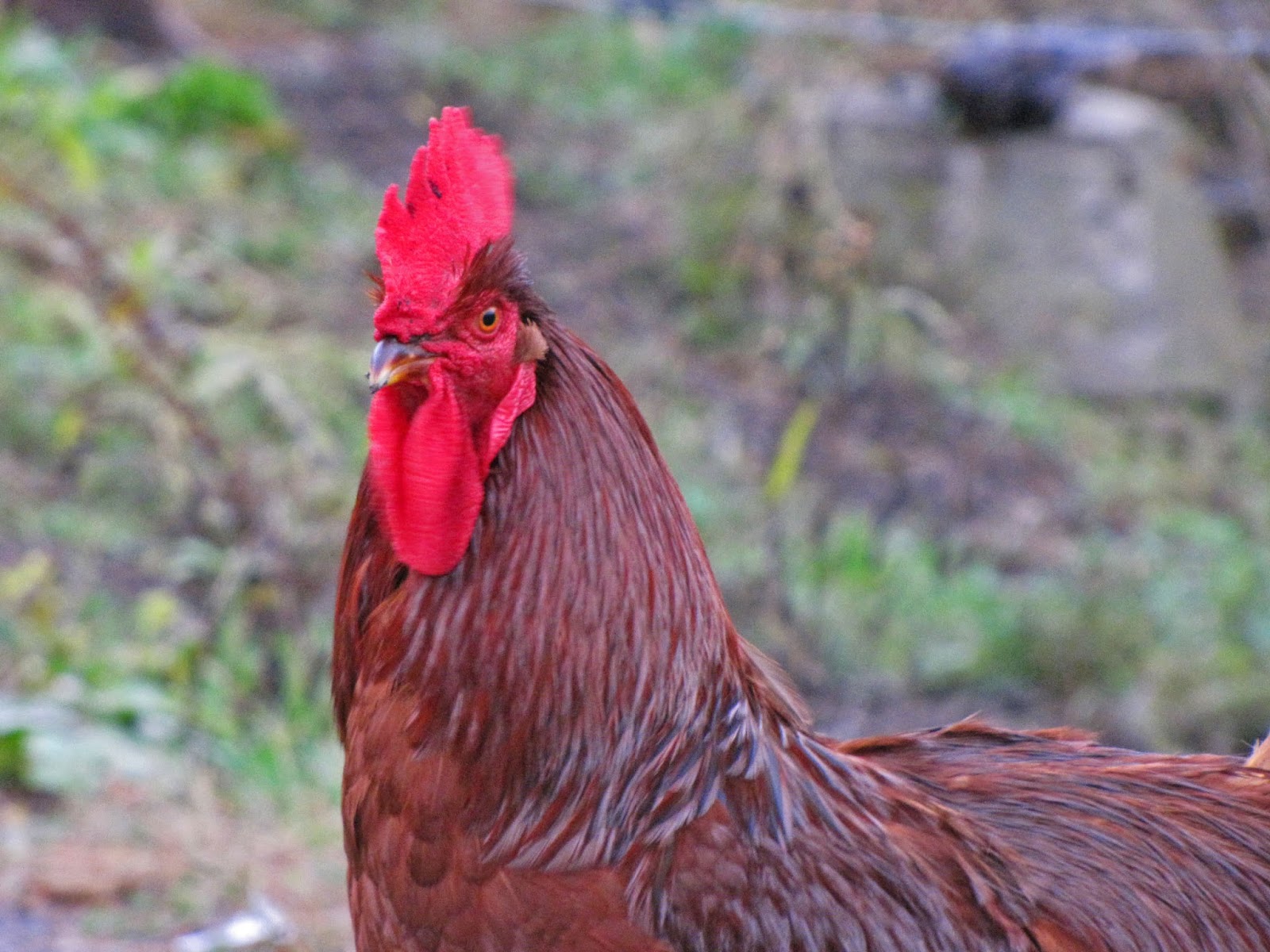
Breed Focus: Rhode Island Red

One of the most popular layers in the US and Rhode Island's state bird, this all-American breed is one of the first things to come to everyone's minds when they think of a chicken.


History of the Rhode Island Red Chicken

Developed in the late 1800s in Rhode Island and Massachusetts, this bird is considered the best American breed of poultry by many people. Originally, the Rhode Island Red had a deep mahogany color red feathers. This beautiful set of feathers were thanks to the Malay chicken, which was one of the breeds used to develop the Rhode Island Red. Other birds used included Asiatic Cochins and Brown Leghorns, for carcass size and egg laying capability. The purpose of this chicken was to have a significant amount of eggs, while dressing out as a nice carcass for the table. In 1902, the breed was admitted to the Standard of Perfection with the single combed variety, and the rose combed variety being admitted soon thereafter. 

Characteristics of the Rhode Island Red Chicken

Heritage Rhode Island Reds are most known for their dark mahogany feathers, though most hatchery-quality birds today have a lighter red colored feathering. They can have either a single comb or a rose comb, though the single combed variety is much more popular. Hens weigh around six pounds fully grown and lay brown eggs, while cocks weigh in at about 8 pounds. Heritage-type Rhode Island Red hens are likely to go broody, while production-type birds have had it almost completely bred out. 
Rhode Island Red cocks are known to be on the aggressive side, but fiercely protective of their hens. However, personality varies based on birds, so there are docile RIR cocks as well.
These birds are excellent for small farms. They lay extremely well for a dual-purpose bird and can handle inadequate conditions better than most breeds, though it is not recommended. Being developed in New England, they are also cold tolerant and often lay in the winter. 
Because hatchery-type Rhode Island Reds (also called production reds) are not bred to the Standard or Perfection and may have blood of other breeds in their heritage, their characteristics may vary. Production-type Rhode Island Reds are more common than the heritage-type birds.

Is this breed for you?

If you want to have a few birds that lay extremely well, even daily, but are more cold hardy than the White Leghorn, this may be the bird for you!  They can do well in a thrown-together DIY coop, as long as there is ventilation and protection from drafts in the winter. If you want a broody hen, you may want to opt for the heritage type or add a single hen of a broody breed, such as an Orpington or a Silkie hen. Though they can be friendly, Rhode Island Reds, for the most part, are  not as fond of affection as some other breeds, so they may not make the best pets. If you don't want loving pet chickens, but a respectable layer and a decent free-ranger, the Rhode Island Red is certainly a breed to consider!

Sources and Links:

Friday, February 6, 2015

Starting an Urban Flock

The Urban Flock - Getting Started

If you live in the city, you may think that you can't have chickens. However, that is not necessarily true. Most cities have a four to six hen maximum, given there are no noise or odor complaints from your neighbors.

Why get chickens?

There are plenty of reasons to get chickens. They control bugs (especially those pesky slugs!), they produce fertilizer for your garden, provide feathers for any crafting uses, and, of course, they lay eggs! Chickens also make good pets. They are comical and are fun to watch as they peck around, bach-bach-baching at each other! Chickens may be a wonderful addition to your family!

So, you want some chickens?

Chickens are a delightful addition to your backyard, but there are a few things to consider before you get chickens. 
The first is to check with local laws, to know how many chickens you can have, how you must house them, and any other laws pertaining to poultry. If you live in a community with a Home Owners Association, make sure chickens are allowed and it is okay with your neighbors!
 Keep in mind that all those things that chickens do, providing bug control, feathers, and eggs, is not free. Especially in start up costs, you have to rake out the cash!
 Then, decide where you will keep your chickens, and how many chickens you have room for. Housing suggestions for chickens is four square feet of coop space, and 10 square feet of run space per chicken. The coop is where your chickens will sleep, lay their eggs, and be sheltered in severe weather. The run is where they will eat, dust, and spend time outside. 
Once you've measured how much space you have, and how many chickens you can keep in that space, it's time to plan your coop! You can buy a pre-made coop online or at a feed store, or you can build your own chicken coop! I made my chicken coop out of an old playhouse that was no longer in use! 
So, ready for chickens now? Hold on, there, we've got a couple more things to cover. 

You need some supplies!

In order to start your flock, you'll need some supplies! 

A feeders and waterers
A brooder (if you're getting chicks) (this can be done with a plastic tote and a desk lamp)
Extra bulbs for your brooder
Chicken feed (or medicated chick feed)
Bedding (I prefer straw and pine shavings)
Nesting boxes (if your coop doesn't have them already)
Grit (crushed up rocks, you can get it at a feed store)
Something to clean the coop with (I prefer the snow shovel)

And that's the basic stuff. 

How are you going to get them/ what breeds?

You can get chickens from a feed store in the spring, or you can order them online from hatcheries. There are pros and cons to both.

Feed store:
Pros:
Easy, no-hassle. Buy your chicks and leave.
Convenient, you likely have a feed store close to you.
You can see your chicks before you buy, you can see any obvious problems. 

Cons:
Often mislabeled breeds by staff
Often poor variety of breeds
Chicks are exposed to the public, may contract illness

Directly from Hatchery:

Pros:
Huge variety of breeds.
Keep better track of labeling.
Chicks are shipped directly to you, without exposure to the public. 

Cons:
May be inconvenient due to shipping rates and minimum order size.
Must plan orders with hatch dates.
You cannot see if there is something wrong before you buy your chicks. 

*Remember, when buying from a hatchery, be sure to notify your post office that you are expecting live poultry and be available to pick them up as soon as they come in. 

What should you get?
There is a huge variety of chicken breeds out there, but not all may suit your family. What you should get depends on what you want, and your situation. 

For egg production:
Red Sexlinks. A hybrid of a red rooster and a silver hen, these birds are egg laying machines. They are known to lay an extra large brown egg almost every single day! If you can only have 3 birds, that is still plenty of eggs for an average sized family! They are called Red Sexlinks because they can be sexed by the color of their down at hatching. Males grow to be white, females are buff to red with white undertones. They are also known as Golden Comets, Red Stars. Cinnamon Queens, Golden Buffs, and many other names. 
Black Sexlinks. Similar to the Red Sexlinks, they are a cross between a red rooster and barred hen. Male black sexlinks are barred, females are black with red feathers on their head and chest. 
Buff Orpingtons: A calm, fluffy breed, they are very popular. Their gentle personalities make them popular choices for families with young children. They go "broody" often and are excellent mothers to their chicks. 
White Leghorns: These flighty white birds are the top egg producer in the United States. They are the layers of the large white eggs that you get at the grocery store. 

For pets:
Silkies: These are one of the most popular pet chickens. They appear to have fur rather than feathers, and are quite small in size. Kids love the fluffy "cottonball" appearance. They also make excellent mothers. They come in many colors including white, black, buff, and blue.
Cochins: These fluffy birds come in both Large Fowl and Bantam sizes. They are popular pet birds, and lay more eggs than many ornamental breeds. You may expect 3 eggs a week per bird, though some report having more. 
Easter Eggers: Green eggs and ham? These hybrid birds are a kid favorite. They come in bantam and large fowl sizes, and lay blue to blue-green eggs. They have the blood of several different breeds in them, including the Ameraucana, which they are often confused with. 
Polish: These ornamental birds are known for the somewhat silly appearance of their crests. They appear to have an 80's "teased" hairdo, and are quite the beautiful bird. They come in many colors including Gold and silver laced (black), and buff laced (white). 

And that's just to name a few! There are tons more breeds that could suit your family! 

What to do when you get your chicks.

Chicks have to stay warm, but must avoid getting too hot as well. It's best to keep them in your house, in a brooder.
My brooder is simply a large plastic tote with a desk lamp clipped to the side, at an angle that the chicks can get away from it. Place a small bowl of water with pebbles in the bottom to make sure they won't drown if they fall in!
Your chicks need to stay in until they're feathered, which is around 6-10 weeks.

Help! My chicks are flying out of the brooder but they're not fully feathered!
Flight feathers and tail feathers are the first to come in - and be fulling functional. Our simple solution was to put an old screen from a window on top of our brooder. Put something mildly heavy on top of it so they can't move it. Consider your carpet saved!

When do they start laying eggs?!

Congratulations! You raised your babies and they are now young pullets. Depending on the breed, they should start laying between four and six months of age! 
But don't you need a rooster to get eggs?!
No. You do not need a rooster for the hens to lay eggs, but you do need a rooster to fertilize them if you plan to hatch your own eggs. I do not suggest getting a cockerel with your initial chicks, and you likely are not allowed to have one in an urban/suburban setting. Roosters come with their own set of possible problems to run into, and it's best to avoid that while you're starting out. 

Have fun!

If you can take care of your dogs or cats, you can take care of chickens. They're not difficult to care for, but take just a little responsibility. Your kids will learn the value of the work they put into something, and the food that comes from that work. You will find yourself entertained by the dumb little things you'll see your chickens do. You'll know that your eggs come from your chickens, that are treated well and nourish your family. Enjoy your chickens!

Resources:

Hatcheries:
Meyer Hatchery (OH) https://www.meyerhatchery.com/
Ideal Poultry (TX) http://www.idealpoultry.com/

Chicken websites:

One of my red sexlink hens. They are superb layers!